Healing Is a Scam: Why Being "Fully Healed” Is a Myth

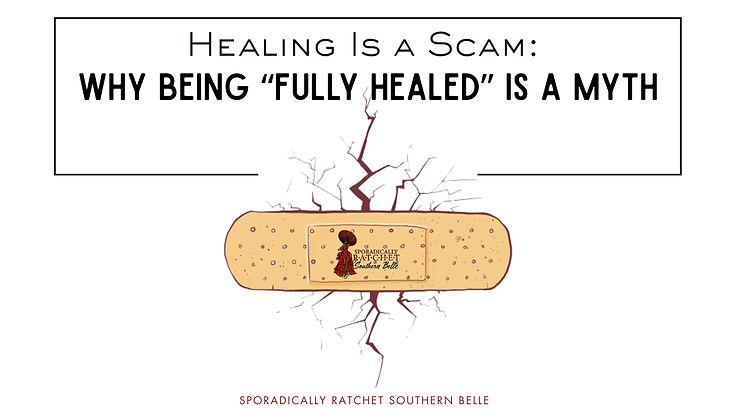
Self-help culture has taken the world by storm, fueled by the rise of social media and the emergence of content creators. Everyone seems to be on a quest to appear “healed” and unbothered, which is, quite frankly, counterproductive. Our journey through life is riddled with trauma, heartbreak, rejection, losing people, and more, but somehow, we are supposed to show up completely healed at some point. As they say, “the math isn’t mathing”.
Our low moments change the trajectory of our lives, no matter how you slice it. The real work isn’t erasing those experiences but learning how to move through the world without letting them block better days.
Physical Wounds Heal – But Do Emotional Ones?
Think of all the times you’ve randomly cut your finger. You probably don’t even remember the majority of them, unless one left a noticeable scar.
When you cut your finger, it hurts, and it bleeds. For the next few days, you keep a bandage on it and try not to reinjure it while it heals. Eventually, the bleeding stops, the pain fades, and you move on with your life. You may not even be left with a scar. The wound is healed, and you probably never think about that cut again. Emotional wounds are not that simple.
When we are wounded emotionally, the internal scars do not magically disappear with time. In severe cases, they can literally alter brain chemistry. Trauma creates triggers we have to learn to cope with for the rest of our lives. Triggers can spark intense emotional and physical reactions. Someone who has been abused may always carry a low-level fear of confrontation, worried it could escalate into violence or further harm. This is a conditioned response. Time alone will never “heal” that wound. The real work is learning how to manage its impact, so future relationships and connections don’t suffer as a result.
This is where the concept of healing becomes misleading. If emotional wounds don’t vanish over time, the expectation that we’ll someday be “fully healed” isn’t just unrealistic; it’s a false finish line we were never meant to reach.
Social Media “Therapists” and the Oversimplification of Growth
On social media, content creators often step into the role of therapists, handing out unsolicited, bite-sized advice. With so many people feeling lost and searching for truth or guidance, it becomes a breeding ground for misinformation. Much of this advice carries a one-size-fits-all energy, drastically oversimplifying the human experience. Reality is far more complex, and “cut them off” isn’t the solution for every moment of discomfort in a relationship. Sometimes, the healthier choice is to get to the root of the issue and work through it, while also accepting that it may resurface in some form because the trigger still exists.
When it comes to romantic relationships, many people buy into the idea that others should “come to me already healed.” But what does that even mean? Are we really expecting to meet someone who has no issues and never gets triggered by anything? That expectation is completely unrealistic. Healing doesn’t end, and at some point, you or your partner will inevitably touch an old wound. That isn’t always a reason to walk away. Sometimes, it’s an opportunity to understand each other more deeply and grow together. Chasing perfection, or a fantasy version of “healed”, can cause you to miss out on relationships that could have been genuinely meaningful.
Are We Chasing a Pipe Dream Called ‘Healed’?
Many people seem to believe that their ability to detach and remain unbothered is a measure of how healed they are. But there’s a clear difference between emotional numbness and actual growth. The goal of emotional growth isn’t to become emotionless; it’s to build endurance and develop healthy coping mechanisms because life’s storms don’t come with timelines. We’re challenged daily in ways that test our mental health, and the only real control we have is how we choose to move through those moments.
Striving for complete detachment can also create shame when emotions inevitably surface. If someone triggers you and your instinct is to suppress the reaction just to appear unaffected, where is the growth in that? When someone cries over a failed relationship and the advice is to “not cry over people who don’t cry over you,” are those emotions actually being processed, or just buried? It’s necessary to allow yourself to feel without attaching shame to it. Feeling pain doesn’t mean you aren’t growing. Sometimes, it’s proof that you are. In every situation, the only way out is through.
Conclusion: Growth Without an End Point
Let go of the idea that you’re flawed because you still feel a twinge of pain when old trauma resurfaces. Life is complex and layered, and there’s no perfect way to handle the curveballs it throws at us. Growth, and what we call healing, isn’t linear, and it’s never going to be perfect or complete. There’s no moment where a switch flips, and you’re suddenly healed, no matter what social media tells you.
Give yourself the grace to feel what you need, when you need to. Feeling pain doesn’t mean you’ve failed or fallen behind; it means you’re human. And contrary to popular belief, you do not need to be completely “healed” to be whole.


Comments